
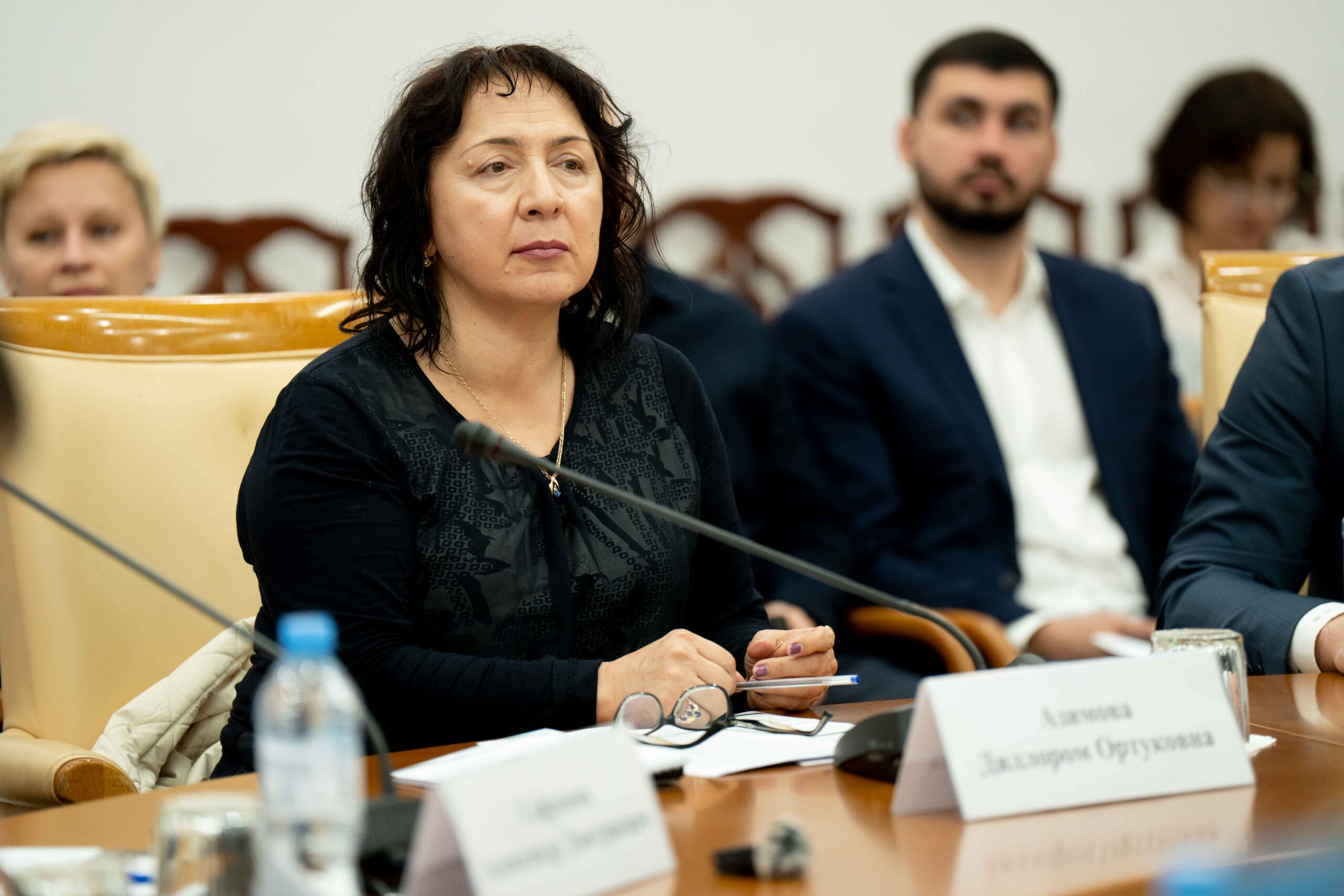
Dillor Ortukovna Azimova, Head of the Women’s Affairs Committee of the Public Council at the Embassy of the Republic of Tajikistan in the Russian Federation, took part in the meeting of the International Discussion Club “VISION 3000”, the theme of which was: “Tourism as a bridge between cultures: development of interregional and international routes”.
Tajikistan remains one of the important actors in the political and economic space of Central Asia, remaining an important strategic partner of Russia since the first year of independence in 1991. Today, the republic continues to build up its own potential in relations with Moscow and its neighbors. As one of the key countries of the Commonwealth of Independent States (CIS), Tajikistan has significant political and economic potential in the Central Asian region. Tajikistan, located in the heart of Central Asia, has a number of advantages and opportunities to enhance its potential in the region. It has a young and growing population (about 10 million people), which can become a source of labor and consumption. The country has a huge water and hydropower potential (about 527 billion kWh per year), which can ensure energy independence and export electricity to neighboring countries.
The republic has significant reserves of minerals such as gold, silver, uranium, aluminum, zinc and others, which can attract investments and technologies. Agriculture and the food industry are developed here, which can improve food security and competitiveness. Tajikistan has a rich cultural heritage and natural beauty that can contribute to the development of tourism. At the same time, the country manages to maintain friendly relations simultaneously with Russia, China, Iran and other countries that can support its economic and political development.
Russia is one of Tajikistan’s main strategic partners, while also being one of Russia’s key allies in Central Asia. The main document defining the legal basis of bilateral relations is the Treaty of Friendship, Cooperation and Mutual Assistance between the Russian Federation and the Republic of Tajikistan dated October 25, 1993.
Tajikistan is one of the most interesting tourist countries in the entire post-Soviet space, as it has a variety of natural landscapes, mountainous terrain, unique flora and fauna. In the republic, in an hour and a half flight from the sultry heat of the Vakhsh valley, one can get into the Arctic cold of the eternal snows of the Pamirs, which indicates the diversity of climatic zones. Priority types of international tourism in the country are considered: – mountaineering, mountain sports and ecological tourism; rafting, para-gliding, alpine skiing; – interohota; – historical, educational and ethnographic tourism; – sanatorium treatment and recreation.
Tajikistan has 3 international airports in Dushanbe, Khujand and Kulyab. The territory of the republic is crossed from west to east by 3 branches of railways that connect the central, northern and southern regions of the republic through the territories of the neighboring states of Turkmenistan and Uzbekistan. On the basis of the 13 existing state nature reserves “Zorkul”, “Romit”, “Mozkul”, “Dashti Jum”, as well as the Tajik National Park, the unique ecology, landscapes and natural monuments have been preserved in their original form. On the territory of Tajikistan is the majestic Pamirs, one of the famous highlands of the globe with absolute heights from 2,800 to 7,495 m above sea level, known worldwide as the “roof of the world.” Here, the tourist resources are climbing routes to the highest mountain peaks – Ismoili Somoni and Evgeniya Korzhenevskaya, located at an altitude of more than 7,000 thousand meters, hunting farms, natural landscapes, caves and mineral springs of thermal and cold, carbon dioxide and silicic acid waters. Every year, International mountaineering expeditions are held in Tajikistan, during which climbers from around the world climb the highest mountain peaks of the country. Climbers from all continents strive to conquer Ismoil Somoni Peak (7,495 meters), the high-altitude pole of the Pamirs. The unique terrain of this region is conducive to the development of hiking and trekking, rock climbing, mountaineering, skiing, mountain tourism combined with hunting and photo hunting, rafting, paragliding, snowboarding, caving and other types of extreme tourism.
The Fan Mountains, which are located between the Zerafshan and Gissar ranges from Kstutdarya to Fandarya, are especially popular among tourists and climbers.In the stone thicket of these mountains there is a mirror of bluish-green water – Lake Iskanderkul, the largest lake of the Fan Mountains, located in northern Tajikistan. At an altitude of 2200 meters. The Iskanderkul campsite is located on the shore of the lake, 160 km from Dushanbe. According to legend, Alexander the Great stopped on its shores, where the commander’s beloved horse drowned in the beautiful turquoise waters. That’s how the lake got its name. Tourists travel by car through the amazing gorges of Fandarya, Yagnob and Iskanderdarya..
Rare endangered species of plants and animals listed in the Red Book have been preserved, including the screw-horned goat (morhur), mountain argali (Marco Polo), Bukhara mountain sheep (ureal), spotted Bukhara deer, snow leopard, Tien Shan brown bear, striped hyena, Indian mountain goose. The republic is home to 84 species of mammals, over 365 species of birds, 49 species of reptiles, about 52 species of fish and more than 10,000 species of insects. The flora of Tajikistan includes over 5,000 thousand plant species, the unique taste of Tajik fruits is due to a combination of favorable climatic conditions, fertile land and centuries-old gardening methods. This is a real gift from nature. The territory of the Tajik National Park is 2.6 million hectares, which covers 18 percent of the country’s territory and 60 percent of the Gorno-Badakhshan Autonomous Region of the republic.
There are 288 tourist and sanatorium-resort facilities in the republic, including 188 hotels, 45 sanatoriums, the rest are houses and recreation areas, tourist bases, and health camps.
There are about 200 sources of mineral and thermal waters on the territory of Tajikistan, on the basis of which the sanatorium-resort tourism direction is developing. The most famous of them are resorts with unique hot underground and hydrogen sulfide springs – “Khoja Obi Garm” and Sarob; resorts with mineral waters “Shaambary”, “Obi garm”, “Zumrad”, “Havatag”, which provide services for the treatment of diseases. Travertines are formed on the hot carbon dioxide springs of the “Garmchashma”, “Bashor” and “Shahdara” sanatoriums in the Pamir highlands – calcareous deposits of the onslaught form. The Garmchashma spring in the Pamirs is located at an altitude of 2325 m above sea level and is visible from afar due to the exceptional whiteness of the travertines, which are shaped like stone bowls with stalactites with natural water of various temperatures (up to 62 ° C), in which you can take hot baths. baths.
Also, 224 travel companies operate on the basis of tourist licenses.
Tajikistan holds deep roots of ancient Zoroastrian beliefs. Zoroastrianism, one of the oldest religions in the world, originated in the territory of modern Tajikistan. His teachings on the struggle between good and evil, and the veneration of fire as a symbol of purity and light had a significant impact on the culture and traditions of the people.
The international Holiday Navruz, widely celebrated not only in the republic, but also in many countries of the world, has Zoroastrian roots. This ancient festival of spring and renewal symbolizes the victory of light over darkness. Many traditions have been preserved in some regions of Tajikistan, which is a living part of Tajikistan’s cultural heritage.Таким образом, Таджикистан представляет собой уникальное сочетание мусульманской и зороастрийской культур, что делает республику интересным объектом для изучения истории религии, этнографии и традиций региона.The unique traditions of Hospitality are one of the most important pillars of Tajik culture. It permeates all spheres of life in Tajikistan. Such traditions are deeply rooted in the mentality of the Tajik people. They remind us that true value lies in human relationships, kindness, and generosity of spirit.
In Central Asia, the Tajik language is recognized by linguists as Indo–European. Their language is closer to Persian than to other dialects spoken in the region. This testifies to the deep historical and cultural ties of the Tajik people with the ancient Persian Empire.
Russian Russian language and culture development in Tajikistan is supported by the country in the field of humanitarian and cultural cooperation, for example, through the opening and financing of Russian schools, libraries, centers and foundations. Russia also provides training and advanced training opportunities at its universities and research centers.
As we can see, tourism in Tajikistan is a developing branch of the country’s economy, which has been developing rapidly in recent years.
The Government of Tajikistan pays special attention to the development of the tourism industry, given its role in shaping the gross domestic product, boosting the foreign trade balance, providing employment and creating additional jobs. Prospects for the development of cooperation between Tajikistan and Russia in the field of tourism were repeatedly discussed during the meeting of the Chairman of the Committee for Tourism Development under the Government of the Republic of Tajikistan with the Deputy Chairman of the State Duma Committee on Tourism and Development of Tourist Infrastructure of the Russian Federation, where issues of expanding bilateral relations in the field of tourism, studying the experience of Russia and attracting investments in this field were discussed.
At the initiative of the President of the Republic of Tajikistan, Emomali Rahmon, in 2017, the Committee for Tourism Development under the Government of the Republic of Tajikistan was established in Tajikistan, which once again confirms the importance of developing this industry, which has great prospects in the future and creating a favorable ground for attracting the attention of the international community to tourism in Tajikistan, and further increasing its prestige. countries in the international arena.
More photos on the link https://vk.com/album-211188669_308661589
The International Discussion Club “VISION 3000” is an open platform for the exchange of experience and discussion of issues related to the promotion of Russian and international intellectual dialogue and independent, objective examination of economic, cultural and social projects, bringing together like—minded people whose activities are aimed at dialogue and openness…..https://vision3000.ru/?page_id=7
The online publication “Embassy Life” acts as the general information partner.