
On April 30, 2026, the Moscow House of Nationalities hosted a strategic meeting of the International Discussion Club “VISION 3000” on the topic:
“Generation of Meanings: Youth Policy, Creative Industries, and Social Initiatives as Drivers of Social Development.”
 The event was supported by the Government of Moscow (Department of National Policy and Interregional Relations).
The general information partner is the online media outlet “Embassy Life”.
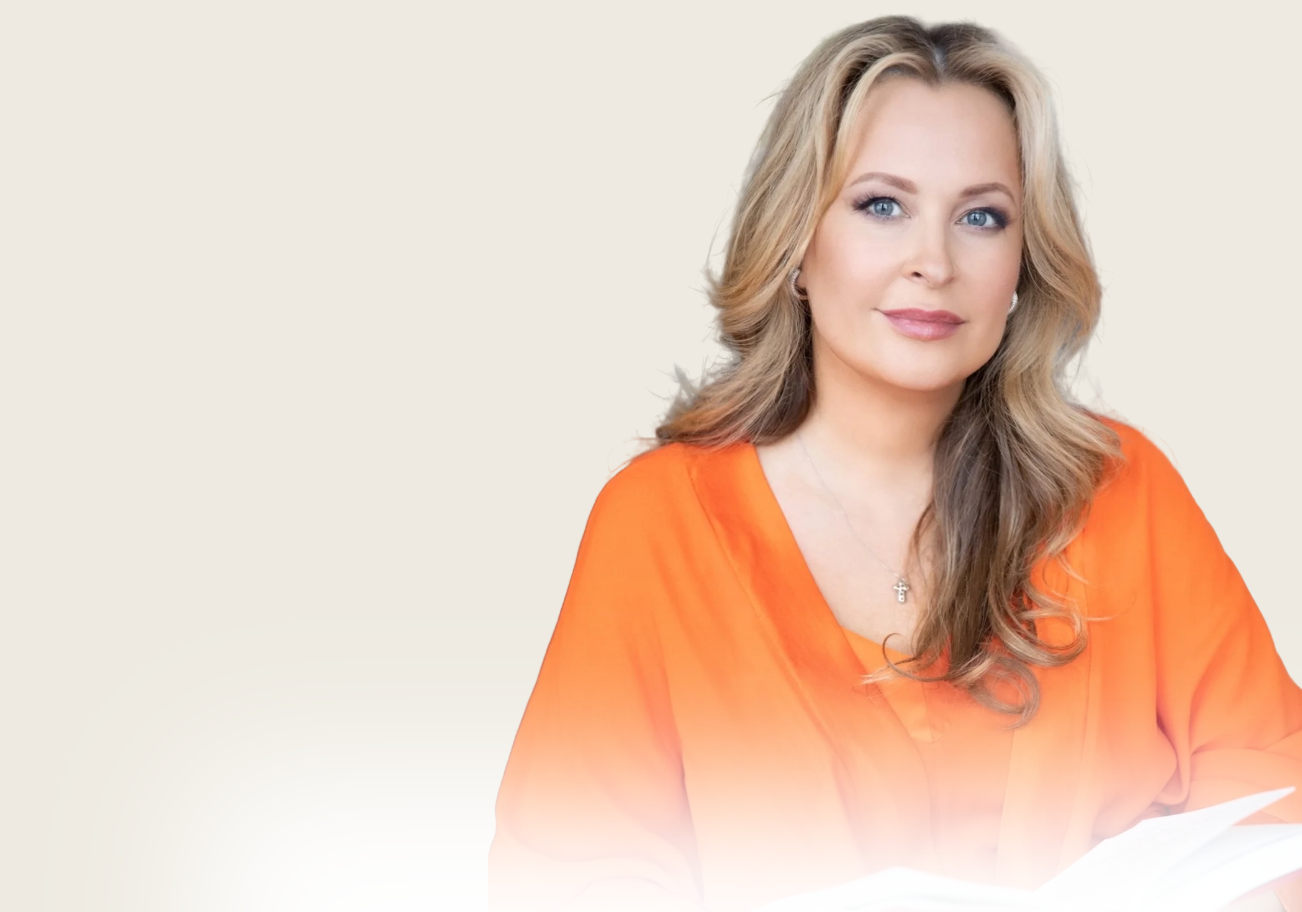
As part of the meeting, Elena Viktorovna Kaiser – Candidate of Pedagogical Sciences, reproductive health expert, mother of five children, member of the NGO “International Women’s Union” – delivered a profound, candid, and highly relevant report. Her presentation, built on personal experience and years of practice, resonated strongly with the participants. Below is the full text of her speech.
🎤 Speech by Elena Kaiser: Full Text
Hello.
My name is Elena Kaiser. I am a conception and childbirth expert, psychologist, and Candidate of Sciences.
My path into the profession began not with theory but with a personal story: from a diagnosis of infertility to the birth of my five children. That is why the topic I am addressing today is so important to me.
The title of my presentation is “Children in Question: What Makes the New Generation Refuse Parenthood?”
Over years of practice, I have observed a clear shift. Previously, women came to me who wanted a second or third child; today, more often than not, these are women over forty who are deciding to become mothers for the first time. At the same time, I work extensively with young people and see how consciously delaying the birth of children is becoming the norm, and sometimes even a principled position.
📊 Numbers and Reality
To understand the scale of what is happening, we need to look at the numbers.
According to sociological studies in Russia, including surveys of more than a thousand young people, the majority cite the desired age for having a first child as the range of 35 to 40 years. At the same time, a significant portion cannot name a specific age at all, instead using phrases like: “when stability comes,” “when we are ready,” “when it becomes safe.”
At first glance, this sounds rational. But behind these answers lies not planning, but postponed life.
🔍 Key Reasons for Refusing Parenthood
Reason one – economic uncertainty, which has long since gone beyond objective factors and become an internal feeling of instability. Young people do not feel secure even where security exists. Income is no longer perceived as sufficient because the bar for a “normal life” is constantly rising.
Reason two – a cultural shift.
In recent years, a powerful media layer has formed that romanticizes life without children. The childfree movement no longer looks marginal. It has become part of mainstream culture, broadcast through films, social networks, and influencers. We are shown a beautiful, mobile, free life without obligations, where a child is presented as a limitation, not a value.
Today, young people are shown every day what a “life without children” looks like: freedom, travel, career, a body in good shape, no responsibility.
And simultaneously, another picture is shown: a woman alone with a child, tired, without support, feeling that she is carrying everything by herself.
I recently worked with a client, and she said bluntly:
“I am afraid of being left alone with a child. I have already seen this in my family and around me.”
This is not a theory. This is an image that has taken hold.
Reason three – personal family experience.
Many grew up with the feeling that parenthood is hard. Not joyful, not interesting, but simply hard. And they say:
“I don’t want to live the way my mother lived.”
“I remember my parents constantly being tired and losing their temper.”
Thus, the refusal is not about children. The refusal is about the model of life they saw.
They are not saying, “We don’t want children.” They are saying, “We don’t want to live the way our parents lived.”
Reason four – inflated expectations of parenthood itself.
Today, a child is perceived as a project requiring ideal conditions: financial, psychological, and material. There is an illusion that you must first become fully ready, and only then have children. The problem is that such a moment never arrives.
Reason five – the illusion that there is plenty of time.
There is a strong narrative being broadcast: freeze your eggs, then do IVF, medicine will help. People develop a feeling that there is no hurry.
Then women over forty come to me and say: “I thought I still had time.” These are very difficult stories.
And finally – the absence of a clear, supportive environment.
Young people do not see systematic help, do not trust institutions, and do not feel that society is interested in their parenthood – rather, it merely expects it.
…And as a result, we have not a rejection of family as such, but postponement, which gradually turns into impossibility.
💡 What Practice Shows
And here I want to say something important as a practitioner.
I work every day with women who want to become mothers but are unable to do so. The reasons vary: medical, age, psychological blocks, past failures.
And very often this is not a story about “impossible.” It is a story about the environment in which a woman finds herself.
People come to me with phrases such as:
“I’m afraid I can’t handle it,”
“I kept postponing and now I don’t know if there’s a chance,”
“I think I want to, but inside there is constant tension.”
And we start working not only with the body. We work with the mind, with beliefs, with experience, with the emotional state. Because it is impossible to arrive at motherhood if inside there is fear, anxiety, and the feeling that you are alone.
And I see the result.
I see women who could not get pregnant for years become mothers. How many children have been born by my side – dozens of stories that began with doubt and ended with new life.
And if we look more broadly, it becomes obvious: environment and surroundings matter greatly!
An environment where a woman feels safe to want a child. An environment where she is not frightened, not devalued, not left alone. An environment where she is helped along the way.
And this is precisely what is lacking at the systemic level.
🛠 What to Do About It?
First. We need to change the tone of the conversation.
When young people hear “we need to improve the demographic situation,” it does not make them want to have children. It creates resistance. Because it sounds like something is being demanded of them.
What matters is a different approach: not “must,” but “why it matters to you.” About value, not about duty.
Second. The image of parenthood in the media.
There are currently two extremes. Either a perfect picture: mother gave birth yesterday, today she is back in shape, business, travel, perfect children. Or the other extreme: “with children, life is hard, career is over, life has ended.”
Neither has anything to do with reality.
We need an honest image. One that includes both difficulties and joy and meaning. And this should come not only through lectures but through films, series, music, and bloggers.
Third, it is critically important to introduce psychological support even before the stage of family planning. Enough of demonizing psychologists. If we look at the state’s position, we offer IVF right away and push psychology aside as something magical. Of course, there is a shift now, and people are becoming more conscious, but psychological help should be offered at the same level as routine medical tests. A pill treats local pain; a psychologist works with the body and soul as a whole.
What can be done concretely:
- introduce free consultations for young couples before planning pregnancy,
- add psychologists to women’s health clinics,
- launch programs to address the fears of parenthood.
Young people need help to work through the fears, scenarios, and beliefs they carry from their own childhood. Without this, any economic measures will have limited effect.
Fourth, we need to reconsider the public perception of parenting age. Delaying until forty is seen as normal, but biology remains unchanged. We need to talk about this openly, without pressure, but with respect for reality.
Finally, we must create an environment where having a child is not perceived as falling out of life. This includes flexible employment, support for young families, and the formation of communities where parenthood does not isolate but brings people together. Give young mothers more opportunities to work and develop while on maternity leave.
There is also a trend: a woman who has just become a mother faces rejections at work – they say she will be on sick leave often and be ineffective. This is nonsense!
As a result, a woman feels that having a child is a risk to her life and career.
This can be changed. Flexible schedules, remote work, employer support – these are not bonuses; they are necessities. And it is important to show that motherhood does not preclude development.
🎯 Main Conclusion
Today’s young people are not against children.
They are against the model of life they associate with parenthood.
If we want to change the demographic trajectory, we will have to change not only support measures but also the very meaning behind the decision to become a parent.
Then the question “to have children or not” will cease to be a question of fear and turn into an informed choice in favor of life.
Thank you.
💬 Outcomes of the Meeting and the Significance of the Report
Elena Kaiser’s speech was one of the most emotional and substantive presentations at the VISION 3000 club meeting. It left no one indifferent – neither government representatives, nor diplomats, nor psychologists, nor students. Her call to speak about parenthood honestly, without fear or demands, relying on psychological support and the real needs of young people, received a warm response from the audience.
The meeting confirmed that issues of trust, cultural code, family values, and demography are at the center of the club’s attention. VISION 3000 continues its work to develop practical solutions based on the dialogue that has taken place.
🌐 About the VISION 3000 Club
The International Discussion Club “VISION 3000” was founded in 2021 on the initiative of the NGO “International Women’s Union”.
It is an open platform for experience exchange and discussion of issues promoting Russian and international intellectual dialogue, independent and objective expert assessment of economic, cultural, and social projects. The club unites like-minded people whose activities are aimed at dialogue and openness.
Goals of the club:
- Deepening international cooperation.
- Joint study of the historical and cultural heritage of participating countries.
- Facilitating dialogue among intellectual elites and objective analysis of events in Russia and the world.
- Building a positive image of Russia internationally.
- Environmental and economic agenda, people’s diplomacy.
The meeting on April 30 once again confirmed the relevance of these goals. The club invites everyone who shares the ideals of preserving cultural heritage, strengthening interethnic harmony, and supporting family values to cooperate.